

Bespoke container conversion jobs are complex to manage. Each one starts as a design brief and ends as an invoice. But between those two points, there are estimates to build, customer approvals to chase, parts to source, staff to allocate, and quality checks to complete before a single box goes out the door.
Many depots still manage that process across a combination of spreadsheets, email threads, and paper-based job cards. which works… until a revision gets missed, a parts order slips, or a job gets invoiced before quality control signs it off. At that point, the cost of an unmanaged process becomes very visible.
Fargo TERM’s Container Conversions module handles the full lifecycle of a bespoke conversion job in one place, from initial design through to invoicing, with workflow controls that keep every job on track and every stakeholder informed.
Estimates that work as hard as you do.
Building an accurate estimate for a conversion job takes time. Fargo TERM lets you construct estimates with as much or as little detail as the job demands. You can select containers from existing stock or add new ones, group tasks by container or by phase, and attach parts — either from your standard inventory or as bespoke items specific to that job.
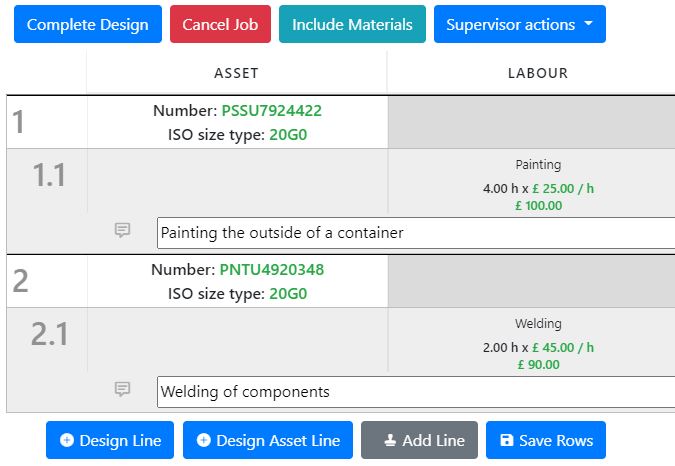
When the estimate is ready, it goes straight to the customer. Fargo TERM generates and emails it automatically, ready for approval. If the customer comes back with revisions, creating an updated version takes seconds rather than starting from scratch. The back-and-forth that normally eats into a project manager’s day is reduced to a controlled, documented process.
Parts management that keeps jobs moving.
Sourcing parts for bespoke conversions is one of the most common reasons jobs run late. Standard parts draw from your stock inventory and update levels automatically as they’re allocated — no separate stock check required. Bespoke parts trigger a clear ordering and receiving workflow so nothing is missing when a build is ready to begin.
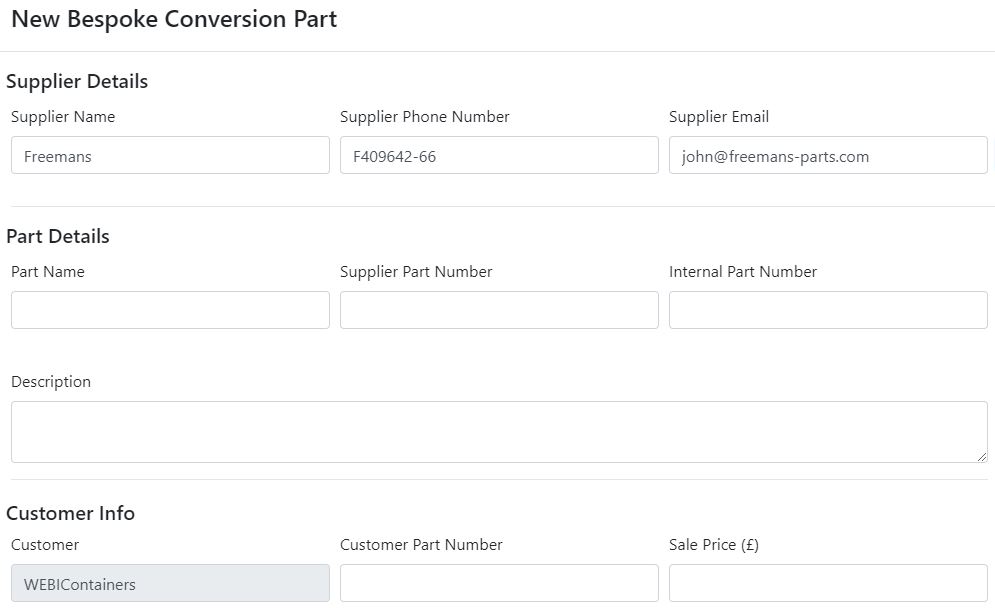
That matters more than it sounds. Fargo TERM prevents a build from starting until customer approval is confirmed and all components are in place. It’s a simple control, but it eliminates the scenario where a team begins work on an incomplete job and has to stop mid-build — wasting time, disrupting scheduling, and frustrating the customer.
Workflow that closes the loop.
Every conversion job in Fargo TERM moves through a structured workflow. Staff are assigned to each build phase. Date ranges are set. A Bill of Materials is generated for each job. Quality control sits at the end of the process — not as an optional step, but as the gate that enables invoicing.
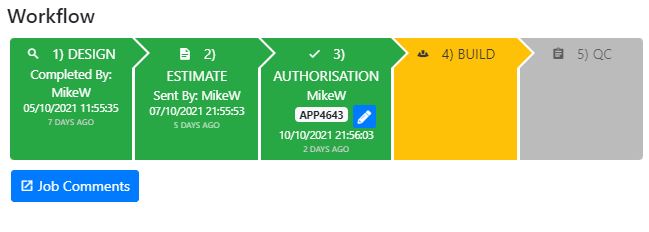
That sequence matters commercially. It means jobs can only be invoiced once they’ve been completed and checked. Revenue recognition is accurate. Disputes are easier to manage because every step of the job is recorded and traceable.
For depots running multiple conversion jobs at once, the visibility alone is transformative. You can see at a glance which jobs are awaiting approval, which are mid-build, and which are ready to invoice — without chasing anyone for an update.
Container conversions are specialist work. They deserve a process that reflects that.
Fargo TERM’s Container Conversions module is part of the wider Fargo TERM terminal management platform. Explore Fargo TERM or speak to our team to see how it works in practice.
