

Are you working with a “status feed”? A screen showing where things are, colour-coded by exception, updated at intervals? It looks like visibility. The problem is that by the time something turns red, the window to prevent the failure has usually already closed.
For freight forwarders and 4PLs orchestrating freight across multiple operators, carriers, and corridors, that gap between knowing what’s happening and knowing what’s about to go wrong is where margin leaks and customer relationships quietly erode.
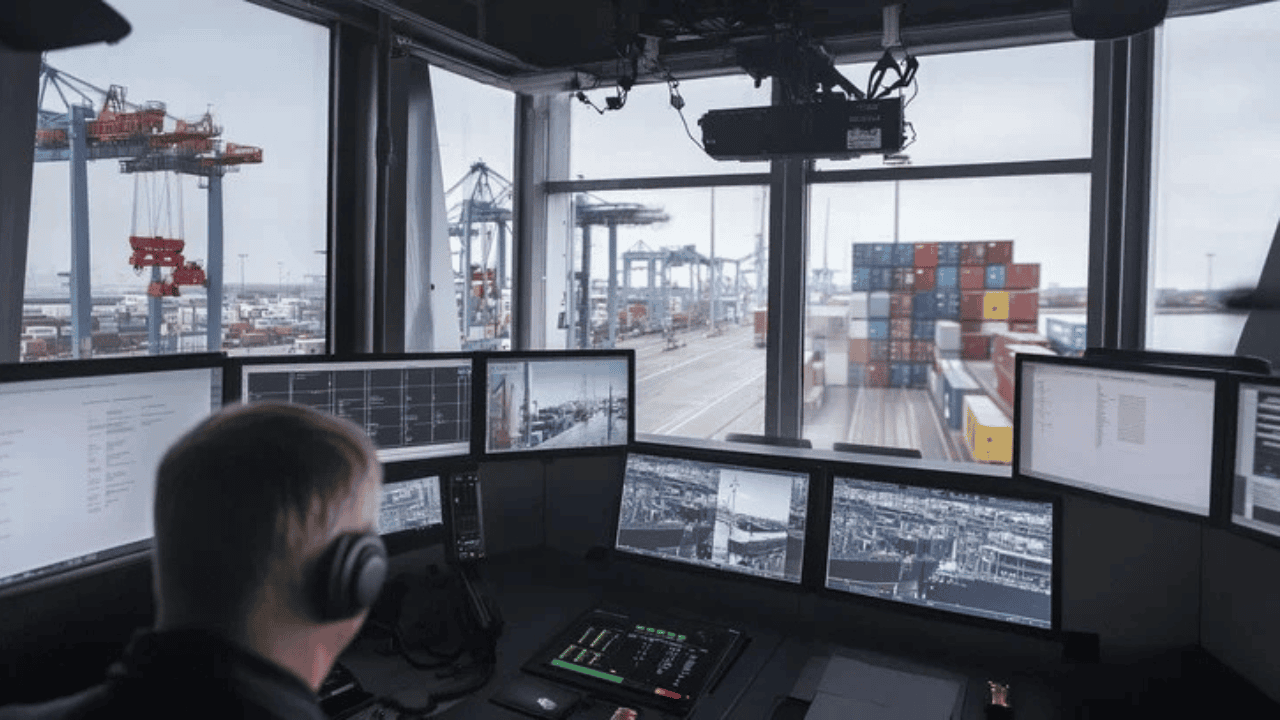
The difference between a status and a signal
Knowing a container is at Felixstowe is a status. Knowing it has three free days of quay rent remaining, that the planned collection run has no vehicle allocated yet, and that the customer’s booking window closes tomorrow is a signal. One tells you where something is. The other tells you what needs to happen in the next four hours.
Control towers that operate on signals rather than statuses make proactive calls to customers instead of reactive apologies. The infrastructure to do that isn’t complicated in principle. But it requires a system with operational depth, not just a live feed.
How Fargo TOPS closes the gap
In Fargo TOPS, demurrage exposure, subcontractor costs, and free day calculations sit alongside every relevant job in the daily planning view. Not in a separate report. Not in a spreadsheet. Right there, next to the job carrying the risk.
The traffic sheet is built for high-volume, multi-operator planning. Column views are fully configurable, filtered to the corridors, customer groups, or exception types a planner needs to focus on. Multiple views can be open simultaneously.
For jobs spanning multiple legs, each trunk is managed separately but stays connected under the same job. Planners can split or merge legs, adjust waypoints, and reassign resources at trunk level without disturbing the underlying job record. Status updates flow in real time whether a job is on own fleet, a primary subcontractor, or a second-tier carrier.
For customers who want to see for themselves, Fargo TOPS Portal gives them direct access to job status, documentation, and performance data. For lighter-touch visibility, Fargo TOPS Tracker is a shareable link showing milestones, proof of delivery, and live tracking. No login, no onboarding.
Why this is different from most visibility tools
A lot of visibility platforms are built wide. They aggregate data from multiple sources and present it in a single view. That’s useful for reporting. It’s less useful at 7am when a planner needs to act on something.
Fargo TOPS is built deep into the operational layer. The visibility isn’t a layer on top of the planning system. It is the planning system. Which means when an exception surfaces, the planner can act on it immediately, in the same place they saw it, without switching tools or exporting data somewhere else.
For 4PLs managing large subcontractor networks, that also means the full audit trail from job creation to final invoice is held in one place. Rate confirmations, cost captures, performance data by customer, by lane, by carrier. When a customer questions a charge or a subcontractor disputes a rate, the answer is in the system.

The objection we hear most
“We already have a TMS. Adding another system creates more complexity, not less.”
It’s a fair concern. The reason it doesn’t apply here is because Fargo TOPS isn’t a visibility layer sitting on top of something else. It’s the operational system of record. Subcontractor management, demurrage tracking, customer reporting, cost capture and invoicing all run through the same platform. The visibility is a product of the data already being there, not a feed from an external source that needs maintaining.
For businesses already running Fargo TOPS for core operations, the control tower functionality isn’t a bolt-on. It’s already in the system.
What makes the difference at the sharp end
Visibility tools are common. Operational depth isn’t.
The control towers that consistently outperform aren’t necessarily the ones with the most data on screen. They’re the ones whose teams spend their time acting on information rather than finding it. That requires a system where the signal and the action live in the same place.
That’s what Fargo TOPS is built for.
Have a question? Want to see this in action? Book a no-obligation call today.