
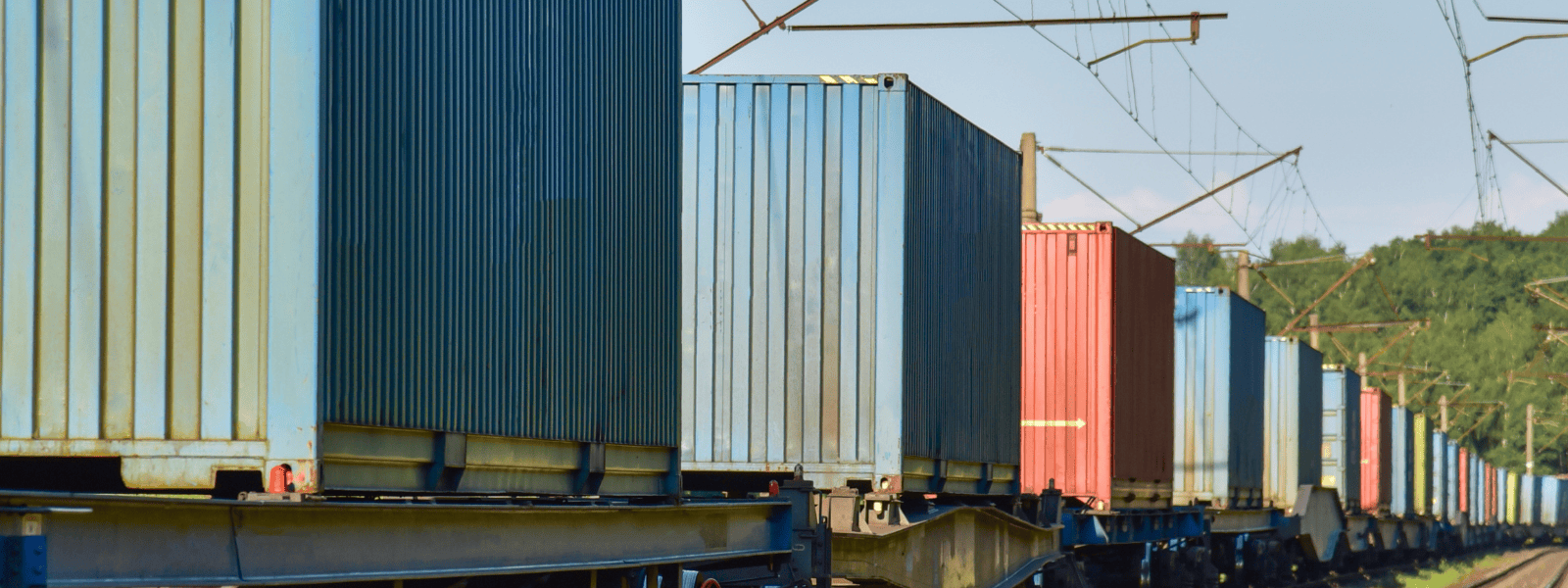
UK rail freight is growing. The environmental and commercial case for moving containers by rail is no longer a hard sell. But there’s a gap in the story that doesn’t show up in the growth figures.
Winning on rail capacity while losing on road execution is the operational challenge that growth is now making impossible to ignore.
Gaps in visibility are compounding
A standard intermodal move involves a road collection from port, a lift at the inland terminal, a rail transit, a second lift at the destination terminal, and a road delivery. Five legs. Each with its own timing, its own resource, its own cost, and its own status to track.
When those legs are managed in separate systems, or across a combination of a TMS, a terminal spreadsheet, and a series of phone calls, the information about each leg doesn’t naturally reach the person managing the next one. A delay on the rail leg doesn’t automatically trigger replanning on the road delivery. Container availability at the destination terminal isn’t visible to the road planner booking the driver. Demurrage clocks running at the port don’t appear in the terminal planning view.
Each gap is manageable in isolation. Across volume, across corridors, across a growing network of subcontracted road carriers, they compound into something that costs real money and damages the customer relationships that rail operators have worked hard to build.
What managing the full intermodal corridor looks like
Fargo TOPS models the intermodal journey as a single job with multiple trunks, each representing a discrete movement leg. All legs are visible from the same traffic sheet, meaning no need to switch between systems or screens to get a clear picture. Status updates on any leg are visible across the whole job. When a leg is delayed, the planner sees the downstream impact immediately and can replan accordingly, acting proactively, rather than reactively.
Waypoints within each trunk can be adjusted, added, or removed without changing the job-level data. This means a terminal operator managing the transfer point can update the load and unload waypoints for their leg without affecting the customer’s job record or the billing structure.
For rail operators who manage road first-mile and last-mile under the same operation, this is the planning architecture that makes it tractable. Own fleet, rail slots, and subcontracted road hauliers are all managed within the same system, with the same visibility, and the same cost capture.
Container dwell time and terminal cost management
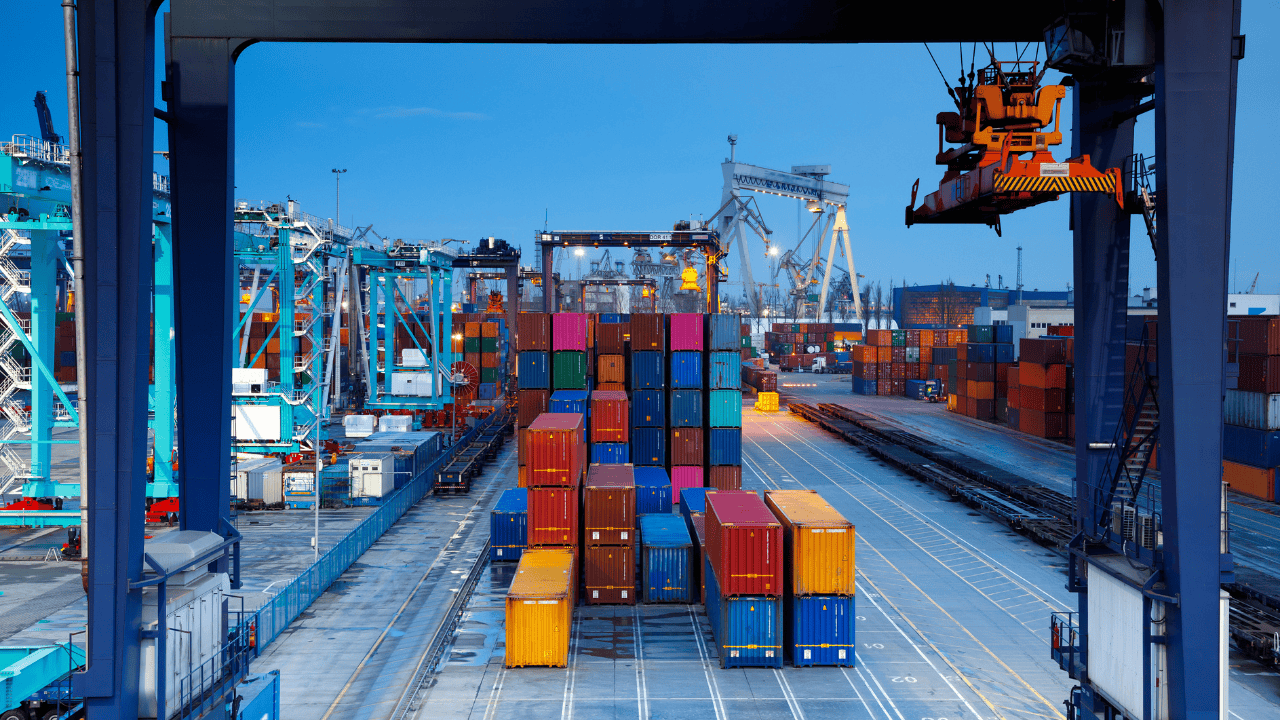
At the terminal interface, container dwell time is a significant cost driver. The Container Stock and Cost Control module in Fargo TOPS gives terminal-adjacent operators visibility of every container currently at a depot or terminal — by days in stock, storage cost accrued, last free storage date, and restitution status. Storage charges calculated from depot tariffs can be applied directly to jobs as cost or revenue items.
For rail operators managing containers that sit at inland terminals between the rail leg and the final delivery, this module provides the cost visibility that makes customer billing accurate and depot charge recovery possible.
Real-time status across the corridor
Fargo TOPS Tracker and Fargo TOPS Portal extend operational visibility to customers across the full intermodal move. A shipper whose cargo is moving port-to-rail-terminal-to-final destination can track milestone progress through a single link without needing to call the rail operator, the road haulier, or the terminal separately.
Why this is different from bolting a TMS onto a rail operation
Most TMS platforms are built for road. Some have been adapted to handle intermodal flows. The difference with Fargo TOPS is that the intermodal corridor is the native use case, not a workaround.
That matters at the handover points. A system built for road manages road legs well. A system built for intermodal manages the lift, the terminal dwell, the rail transit, and the road legs as parts of the same job, because that’s how the operation actually works. The planner doesn’t need to carry the connection between legs in their head. The system carries it.

The objection worth addressing
“We already manage this. Our planners know the operation and we have good relationships with our road partners.”
Experienced planners and strong relationships are genuinely valuable in this industry and nothing here replaces them. The question is what happens when volume grows, when a planner is absent, or when a customer asks for a performance report across six months of corridor movements and someone has to build it from memory and spreadsheets.
The operations that scale are the ones where the system carries the knowledge, not just the people.
The rail freight market is growing and the operators who will capture most of that growth are the ones who can make the full door-to-door proposition as reliable as the rail leg itself.
That’s not a technology argument. It’s a commercial one. Shippers choose rail when they trust the whole journey. The operational infrastructure to deliver that trust is what Fargo TOPS is built for.