

GB Railfreight ran 8 trains when it started working with Fargo. It now runs 28. Over more than 20 years, the technology underneath the operation has evolved with it.
A container terminal depends on visibility from the road and rail operators moving through it. GB Railfreight shows what that same dependency looks like from the opposite direction, a rail freight operator relying on the terminals it moves through for accurate handoffs, timely data and safe execution. It’s the same intermodal relationship a terminal operator manages, seen from the other end of it, and it’s why GBRf’s experience is directly relevant here.
GB Railfreight moves containers between Britain’s deep-sea ports and inland terminals, alongside aggregates, energy and infrastructure traffic. In July 2026, Office of Rail and Road figures made it the largest rail freight operator in Great Britain by share of freight train kilometres, 25 years after it ran its first service.
Fargo has been part of that journey since 2005.
When the relationship began, GBRf’s intermodal operation was running around eight trains and much of the process behind them was manual.
Orders arrived by email or over the phone. Jobs were written into train lists, sent to ports and keyed in again. Checking whether a container was cleared and landed meant someone logging into a port system to look.
It worked at that scale. But GBRf wasn’t planning on staying that size.
Building for Rail
As GBRf grew, Fargo TOPS has evolved with it.
The two businesses worked together to develop the system around the specific requirements of rail moving beyond managing jobs to supporting the operational detail required to build and execute an intermodal service.
The tipping point came at around eight trains.
GBRf could continue adding people every time it added another service, or put technology underneath the operation that could scale with it.
“We couldn’t keep adding people every time we wanted to run a new train. The benefit Fargo has given us immediately is scale. Without it, we wouldn’t be able to deal with the volume, not without an army.”
JULIE GARN, INTERMODAL DIRECTOR GB RAILFREIGHT
From Train Planning to Safe Box-to-bay
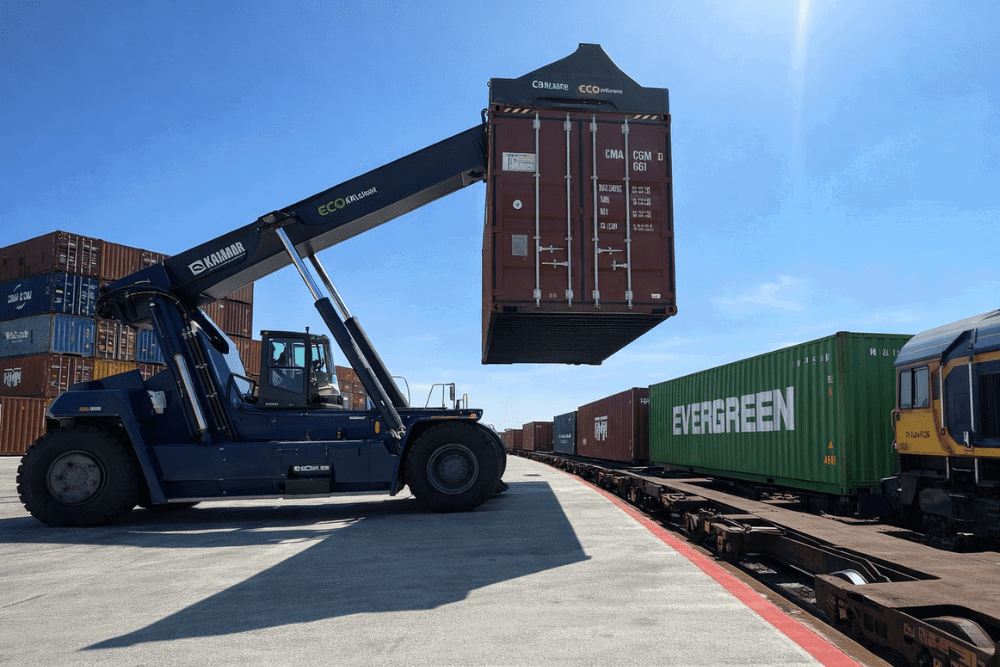
Today, Fargo TOPS supports GBRf from schedule management through to detailed box-to-bay planning.
Containers are allocated to specific wagons, platforms and pin positions, with GBRf’s loading guidelines built into the system. As the plan is created, Fargo TOPS validates it against those parameters, helping ensure containers are positioned correctly and the resulting train plan meets GBRf’s requirements for safe loading.
That validation continues across the handoff between rail operator and terminal.
Plans can pass electronically to the terminals responsible for loading and unloading the train. Box-to-bay plans created by inland container depots can also come back into Fargo TOPS, allowing GBRf to validate them against its loading guidelines before passing them onwards to the destination port. None of this works unless the terminal on the other end of that handoff has equally reliable data to work from.
Fargo provides a consistent set of operational and safety rules around that plan as it moves between the organisations responsible for executing it.
From Exchanging Paper to Exchanging Data
The information flows around the operation have evolved too.
GBRf uses EDI with the Felixstowe Dock and Railway Company and CNS for Southampton, London Gateway and all the inland terminals that make up the network.
When a train arrives at or departs from a terminal, gate-move notifications can flow back into Fargo TOPS and update the relevant job. Train misses and exceptions can be identified immediately, while information received from depots enriches the operational record.
If an unscheduled container arrives at a terminal, its container number can be imported into Fargo TOPS before it has even been allocated to a train.
In September 2025 alone, Fargo TOPS processed 194,608 EDI messages across GBRf’s customers and suppliers.
What began as an operation moving information between businesses manually has become a connected flow of operational data between GBRf, its customers, ports, terminals and depots, the rail operator’s side of the same visibility problem a terminal faces from its own side.
An Important Distinction
Fargo doesn’t just understand the rail movement. It understands the handoffs around it.
The same is true in reverse. A terminal’s ability to plan efficiently depends on equally reliable information arriving from the rail and road operators it serves. Whether Fargo sits on the rail side of that handoff, as it does for GBRf, or the terminal side, the requirement is identical, accurate, early visibility exchanged between the parties either side of the container.
The result is a safer, more consistent process from planning through to terminal execution, while removing the manual checking that would otherwise become increasingly difficult at GBRf’s scale.
From 8 Trains to 28
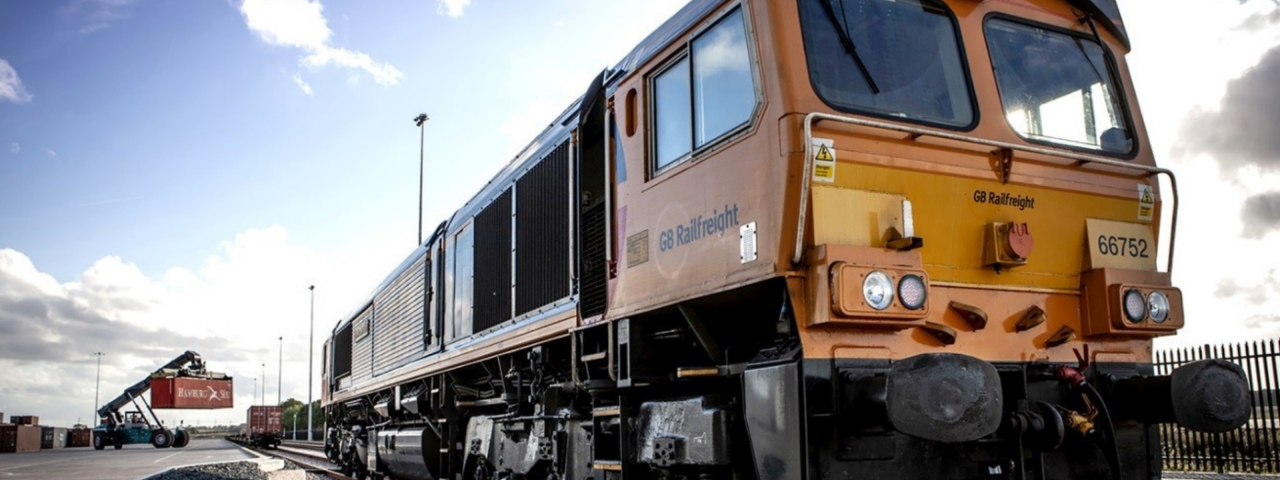
That evolution has supported a very different operation.
The Felixstowe operation has grown from around two trains to 28, with approximately 24 people directly involved in filling them. In July 2026 alone, it moved 50,407 containers.
Customer orders arrive electronically. Teams can see capacity in one place. Trains can be planned down to individual wagon positions. When disruption occurs, entire container loads can be removed from one service and replanned onto another, with customers updated quickly.
Billing also sits within the same operational environment. An intermodal business generating around £130m annually is supported from a billing perspective by just three people.
The operation has grown significantly. The administrative burden hasn’t had to grow with it.
Knowledge built over two decades
The system hasn’t stood still because GBRf hasn’t stood still.
More than 20 years of working together have created technology shaped around the realities of the operation and people with an understanding of GBRf, which would be difficult to recreate elsewhere.
The two teams continue to meet regularly, turning new operational requirements and ideas into development projects.
“Fargo underpins all that we do. We see it as fundamental as one of our locomotives or rail wagons. It’s part of what makes us able to do what we do.”
Julie Garn, Intermodal Director, GB Railfreight
For a terminal operation, GBRf’s experience is a mirror image of your own. Fargo has evolved from software supporting an emerging intermodal operation into the operating system behind it, connecting the information, processes and partners that keep one of Britain’s largest rail freight businesses moving. The same connected approach that removes friction on the rail side of an intermodal exchange does the same on the terminal side.